
Friday, July 07, 2006

Tuesday, June 20, 2006
What I've been doing lately, and it's been good.
“The contemplative life must provide an area, a space of liberty, of silence, in which possibilities are allowed to surface and new choices – beyond routine choice – become manifest. It should create a new experience of time, not as stopgap, stillness, but as “temps vierge” – not a blank to be filled or an untouched space to be conquered and violated, but a space which can enjoy its own potentialities and hopes – and its own presence to itself. One’s own time. But not dominated by one’s own ego and its demands. Hence open to others – compassionate time, rooted in the sense of common illusion and in criticism of it.”
(“temps vierge”: French, literally, “virginal time.” Cf. in Merton’s Conjectures of a Guilty Bystander (page 117 of the original Doubleday edition) his use of the phrase “point vierge” to describe “the first chirps of the waking birds” at dawn near the monastery in Kentucky. “They begin to speak to Him, not with fluent song, but with an awakening question that is their dawn state, their state at the ‘point vierge.’ Their condition asks if it is time for them to ‘be.’ He answers ‘yes.’ Then, they one by one wake up, and become birds.”)
From The Asian Journals of Thomas Merton
(New Directions Publishing Corp. New York, 1975) Page 117, 177.
(“temps vierge”: French, literally, “virginal time.” Cf. in Merton’s Conjectures of a Guilty Bystander (page 117 of the original Doubleday edition) his use of the phrase “point vierge” to describe “the first chirps of the waking birds” at dawn near the monastery in Kentucky. “They begin to speak to Him, not with fluent song, but with an awakening question that is their dawn state, their state at the ‘point vierge.’ Their condition asks if it is time for them to ‘be.’ He answers ‘yes.’ Then, they one by one wake up, and become birds.”)
From The Asian Journals of Thomas Merton
(New Directions Publishing Corp. New York, 1975) Page 117, 177.
Monday, June 12, 2006
Trinity Sunday, St. Peter's Eastern Hill
The question we take up today, with some fear and trembling, is what the concept of the Trinity might mean. Now, I am going to put aside the 100 plus years of committee meetings that culminated in the council of Nicea, and I am saying absolutely nothing about the Da Vinci code, but I will say that the Trinity is an icon that works in mapping out the places where we find meaning in life. It’s a kind of tool to tease out and deal with the geography involved in the question of why and what the universe means: where the meaning can be found, why this matter does matter. Note then that the Trinity first deals with a question of “why” rather then “how”, and that’s an important distinction.
In an early book called, I think, Vile Bodies, Evelyn Waugh writes of an Anglican clergyman who had doubts about the doctrine of creation: not how, but why. He figured that God, being God, could do anything he wanted, but the larger question was why, why bother? And that makes sense. Why is more important than how. We can believe in the big bang theory, or whatever vocabulary currently comes to explain how it all begins, But the deeper question is why, why bother unless it is good, valuable, deserving of some thanks, worth the trouble? When the bang’s sounded, the work finished, the day done, is the last word “Good, Very Good”, (which is what comes in Genesis) or is it, “Gee, maybe I’ll try again tomorrow.” or is it just silence, or the sound of a lonely wind in a largely empty universe?
What the first part of the concept of the Trinity stands for, and what we stand for, hope for, look for, when we come here, what we’re banking on with our time and our talent, is that there is a heart at the heart of it. That God is at the beginning. We use the vocabulary of the tradition we stand in. And so, in words from scripture, we speak of the loving creator, the good father, who was there when the foundations were laid, the bases sunk, when - as Job puts it- the morning stars came together and all the heavenly beings sang for joy. This is the God, as we hear in this mornings reading from Deuteronomy: [who] “created human beings on the earth [and led them] by signs and wonders, by a mighty hand and an outstretched arm, and by terrifying displays of power. The God in heaven above and on the earth beneath; that is at the centre of it, that there is no other.” That is the why we are looking for, that’s our foundation for the rest.
We show up here to try to follow that value and to let those values incorporate in our lives: taking in the stories, traditions, statutes and commandments, making them make sense and sing in our own time. It’s quite a task! To keep the horizon that wide, the story that pointed, the hope supple, alive and still new, that the universe might mean this much. And isn’t easy and it can go so wrong. A Professor of mine in seminary said that sometimes people come to church to be godly and they end up being sort of lordly instead. Religious thinking can go wrong! My God is big and mighty and so am I! My God is bigger than yours! My religion has more room, more truth, more style, better liturgy, we’re more absolute, more tolerant, more evangelical, more catholic, we have more members, we have better taste! We get so godly we move on to be lordly, we get so godly and lordly that we forget what a gift it is to be simply human.
To be human is to be on an unfinished journey and to move on in hope, just walking together step by step on the creative faithful journey that goes on to the centre of it. Because that recalls us, remembers us, renews us as part of that beloved inspired creation, as children of God. And that moves us close to Jesus, close to the one who lives out his life fully in hope and love in the very middle of the human way.
Jesus is a picture of the where and why of God’s love, and sometimes it is difficult to keep his whole life in focus. We see him so clearly as savior, redeemer, Lord of All, the one who wins through death and meaningless. And he is that, no mistake: but throughout scripture and the tradition we see another side to his life, which is Jesus as the hidden one, the victim of the day, sore, oppressed, wounded, silent, crushed. This is not always easy to see. It is easier to look at the triumph than the tragedy, but tragedy happens, and the good news is that God has room for us there. Jesus takes place, makes room, meets with people who hurt, are bruised, battered and occasionally broke. He walks with all the incomplete and unfinished folks on the way, doing the best we can with what we have at the moment. In Jesus, the God of the creation pitches a tent right down on the ground of human dwelling. And we find that this kingdom is built with the rawest kind of compassion and camaraderie right there in the dirt.
In Jesus, God walks through the very centre of the human condition, and breaks open from the inside, the deepest pain and promise of the human heart to be made whole, to finally connect.
So that’s two out of three of the trinity. We come here to remember how big God might be, that God – beyond all conceptions, theories, and theologies we might want to use of - that God comes first, before all things, and in Jesus we come to see God close at hand in all that it means to be fully human. So there’s the why (and even the how) of God and humankind coming close to meet and mingle and walk and live and die and rise together in the middle of this unfinished, often unkind - and sometimes it seems altogether undone - world. And that is why and where we need the spirit.
We need the spirit to continue the work of this renewed family: brooding and breathing and weaving together this new creation, this true family of humankind, which we see in the life and light and lens of Jesus. We need the Spirit to simply and silently sew this new awareness, in silence, compassion and care, into every cell, every seed, every tear and stone and drop of rain, each and every, so that this love and care of God we see in Christ may be all in all.
Go back to the book for that. Where the spirit hovers over the creation before a word, a song, or a big bang for that matter, was ever heard. That same spirit is seen and spoken in words of the prophets, That same spirit shines out in the life, teaching, death and resurrection of this Jesus, who shows up just in time to ask us to come and see the nature of hope and grace, and take on the yoke and promise that comes with living and walking with God in the middle of the human journey.
And the same spirit comes to bind us together as we strive to give hope, strive for justice, promote healing, renew and forgive, make for community. That same spirit softens our hearts, keeps our pity fresh and our compassion clear, binds us together in hope in our calling, leads us to begin again.
So in the end, the trinity is an icon that aims to show us the complexity and simplicity of God: that God is creating all things from the very beginning, that God is the healing in the very heart of the human condition, and that God is in the intimate embracing of every good relationship. For in the life of the Holy Trinity we find our hope.
Amen.
In an early book called, I think, Vile Bodies, Evelyn Waugh writes of an Anglican clergyman who had doubts about the doctrine of creation: not how, but why. He figured that God, being God, could do anything he wanted, but the larger question was why, why bother? And that makes sense. Why is more important than how. We can believe in the big bang theory, or whatever vocabulary currently comes to explain how it all begins, But the deeper question is why, why bother unless it is good, valuable, deserving of some thanks, worth the trouble? When the bang’s sounded, the work finished, the day done, is the last word “Good, Very Good”, (which is what comes in Genesis) or is it, “Gee, maybe I’ll try again tomorrow.” or is it just silence, or the sound of a lonely wind in a largely empty universe?
What the first part of the concept of the Trinity stands for, and what we stand for, hope for, look for, when we come here, what we’re banking on with our time and our talent, is that there is a heart at the heart of it. That God is at the beginning. We use the vocabulary of the tradition we stand in. And so, in words from scripture, we speak of the loving creator, the good father, who was there when the foundations were laid, the bases sunk, when - as Job puts it- the morning stars came together and all the heavenly beings sang for joy. This is the God, as we hear in this mornings reading from Deuteronomy: [who] “created human beings on the earth [and led them] by signs and wonders, by a mighty hand and an outstretched arm, and by terrifying displays of power. The God in heaven above and on the earth beneath; that is at the centre of it, that there is no other.” That is the why we are looking for, that’s our foundation for the rest.
We show up here to try to follow that value and to let those values incorporate in our lives: taking in the stories, traditions, statutes and commandments, making them make sense and sing in our own time. It’s quite a task! To keep the horizon that wide, the story that pointed, the hope supple, alive and still new, that the universe might mean this much. And isn’t easy and it can go so wrong. A Professor of mine in seminary said that sometimes people come to church to be godly and they end up being sort of lordly instead. Religious thinking can go wrong! My God is big and mighty and so am I! My God is bigger than yours! My religion has more room, more truth, more style, better liturgy, we’re more absolute, more tolerant, more evangelical, more catholic, we have more members, we have better taste! We get so godly we move on to be lordly, we get so godly and lordly that we forget what a gift it is to be simply human.
To be human is to be on an unfinished journey and to move on in hope, just walking together step by step on the creative faithful journey that goes on to the centre of it. Because that recalls us, remembers us, renews us as part of that beloved inspired creation, as children of God. And that moves us close to Jesus, close to the one who lives out his life fully in hope and love in the very middle of the human way.
Jesus is a picture of the where and why of God’s love, and sometimes it is difficult to keep his whole life in focus. We see him so clearly as savior, redeemer, Lord of All, the one who wins through death and meaningless. And he is that, no mistake: but throughout scripture and the tradition we see another side to his life, which is Jesus as the hidden one, the victim of the day, sore, oppressed, wounded, silent, crushed. This is not always easy to see. It is easier to look at the triumph than the tragedy, but tragedy happens, and the good news is that God has room for us there. Jesus takes place, makes room, meets with people who hurt, are bruised, battered and occasionally broke. He walks with all the incomplete and unfinished folks on the way, doing the best we can with what we have at the moment. In Jesus, the God of the creation pitches a tent right down on the ground of human dwelling. And we find that this kingdom is built with the rawest kind of compassion and camaraderie right there in the dirt.
In Jesus, God walks through the very centre of the human condition, and breaks open from the inside, the deepest pain and promise of the human heart to be made whole, to finally connect.
So that’s two out of three of the trinity. We come here to remember how big God might be, that God – beyond all conceptions, theories, and theologies we might want to use of - that God comes first, before all things, and in Jesus we come to see God close at hand in all that it means to be fully human. So there’s the why (and even the how) of God and humankind coming close to meet and mingle and walk and live and die and rise together in the middle of this unfinished, often unkind - and sometimes it seems altogether undone - world. And that is why and where we need the spirit.
We need the spirit to continue the work of this renewed family: brooding and breathing and weaving together this new creation, this true family of humankind, which we see in the life and light and lens of Jesus. We need the Spirit to simply and silently sew this new awareness, in silence, compassion and care, into every cell, every seed, every tear and stone and drop of rain, each and every, so that this love and care of God we see in Christ may be all in all.
Go back to the book for that. Where the spirit hovers over the creation before a word, a song, or a big bang for that matter, was ever heard. That same spirit is seen and spoken in words of the prophets, That same spirit shines out in the life, teaching, death and resurrection of this Jesus, who shows up just in time to ask us to come and see the nature of hope and grace, and take on the yoke and promise that comes with living and walking with God in the middle of the human journey.
And the same spirit comes to bind us together as we strive to give hope, strive for justice, promote healing, renew and forgive, make for community. That same spirit softens our hearts, keeps our pity fresh and our compassion clear, binds us together in hope in our calling, leads us to begin again.
So in the end, the trinity is an icon that aims to show us the complexity and simplicity of God: that God is creating all things from the very beginning, that God is the healing in the very heart of the human condition, and that God is in the intimate embracing of every good relationship. For in the life of the Holy Trinity we find our hope.
Amen.
Sunday, May 28, 2006
The Waking - Theodore Roethke
I wake to sleep, and take my waking slow.
I feel my fate in what I cannot fear.
I learn by going where I have to go.
We think by feeling. What is there to know?
I hear my being dance from ear to ear.
I wake to sleep, and take my waking slow.
Of those so close beside me, which are you?
God bless the Ground! I shall walk softly there,
And learn by going where I have to go.
Light takes the Tree; but who can tell us how?
The lowly worm climbs up a winding stair;
I wake to sleep, and take my waking slow.
Great Nature has another thing to do
To you and me, so take the lively air,
And, lovely, learn by going where to go.
This shaking keeps me steady. I should know.
What falls away is always. And is near.
I wake to sleep, and take my waking slow.
I learn by going where I have to go
The Waking published in 1953 from The Complete Collected Poetry of Theodore Roethke
I feel my fate in what I cannot fear.
I learn by going where I have to go.
We think by feeling. What is there to know?
I hear my being dance from ear to ear.
I wake to sleep, and take my waking slow.
Of those so close beside me, which are you?
God bless the Ground! I shall walk softly there,
And learn by going where I have to go.
Light takes the Tree; but who can tell us how?
The lowly worm climbs up a winding stair;
I wake to sleep, and take my waking slow.
Great Nature has another thing to do
To you and me, so take the lively air,
And, lovely, learn by going where to go.
This shaking keeps me steady. I should know.
What falls away is always. And is near.
I wake to sleep, and take my waking slow.
I learn by going where I have to go
The Waking published in 1953 from The Complete Collected Poetry of Theodore Roethke
Thursday, May 25, 2006
A Night at the Movies!
Cinema Nova proudly presents
A discussion on The Da Vinci Code
With RMIT academic John Lenarcic and chaplain Robert Whalley
A theoretical examination of the popularity of this cultural phenomenon.
Thursday May 25 at 6.45pm
Join Lenarcic and Whalley in an insightful forum as they consider the theoretical underpinnings of why THE DA VINCI CODE is so popular.
Lenarcic suggests that flirting as it does with the notion of "deity as goddess", Dan Brown's work is at heart a deeply feminist parable. This in part would explain its mega-success. His discussion will view THE DA VINCI CODE as a Rorschach test for modern society: a cultural phenomenon upon which the wider feelings of the interested community are projected - mistrust of authority, for example. In this skepticism of those in control there breeds an obsessive fascination with conspiracy theories in some (Just ask Oliver Stone!). Some would argue that THE DA VINCI CODE is just fiction. Yes, says Lenarcic, but it's actually more like "faction" - the blending of the real and the imaginary. The desire of the public to make it more real than it is perhaps is a reflection of a hunger for greater knowledge in the philosophical sense. The fact that we have THE DA VINCI CODE primers, guide-books, lectures and film forums is a positive sign: Consumers of pop culture don't just crave entertainment, some aspire to a deeper understanding of the experience.
To deepen your understanding of the experience – buy a ticket at the Cinema Nova Box Office today. Screening Followed by discussion. Bookings are essential. Tickets: $14.00/$10.00
A discussion on The Da Vinci Code
With RMIT academic John Lenarcic and chaplain Robert Whalley
A theoretical examination of the popularity of this cultural phenomenon.
Thursday May 25 at 6.45pm
Join Lenarcic and Whalley in an insightful forum as they consider the theoretical underpinnings of why THE DA VINCI CODE is so popular.
Lenarcic suggests that flirting as it does with the notion of "deity as goddess", Dan Brown's work is at heart a deeply feminist parable. This in part would explain its mega-success. His discussion will view THE DA VINCI CODE as a Rorschach test for modern society: a cultural phenomenon upon which the wider feelings of the interested community are projected - mistrust of authority, for example. In this skepticism of those in control there breeds an obsessive fascination with conspiracy theories in some (Just ask Oliver Stone!). Some would argue that THE DA VINCI CODE is just fiction. Yes, says Lenarcic, but it's actually more like "faction" - the blending of the real and the imaginary. The desire of the public to make it more real than it is perhaps is a reflection of a hunger for greater knowledge in the philosophical sense. The fact that we have THE DA VINCI CODE primers, guide-books, lectures and film forums is a positive sign: Consumers of pop culture don't just crave entertainment, some aspire to a deeper understanding of the experience.
To deepen your understanding of the experience – buy a ticket at the Cinema Nova Box Office today. Screening Followed by discussion. Bookings are essential. Tickets: $14.00/$10.00
Sunday, May 21, 2006
The Sixth Sunday in Easter, St. Peter's Eastern Hill
The 20th century poet Robert Frost once wrote something to the effect that you should take the light things seriously and the serious things lightly. That line kept coming to mind this week as I was living with the Gospel for today which is John the evangelist at his most seriously sublime with words that, at least for me, point to the very centre of the good news of the saving love of God in the face of Jesus Christ. Listen:
“As the Father has loved me, so I have loved you; abide in my love... love one another as I have loved you. No one has greater love than this, to lay down one’s life for one’s friends. You are my friends.”
So how do we, can we, respond to these amazing words? How do we receive this message? How can we listen and live out our lives in light of the - almost beyond belief - possibility that this is all true, that the Good News is this good? That God is with us as a human being giving his life over as a gift, in order to share the road as a friend. God is my friend! I’ve heard that line before – we all have - but still, God wants to be, is willing to be, is here to be, my friend. That’s the line that stayed with me all week: a friend.
It is a surprising turn in this book of the New Testament. On the whole, the Gospel of John has a very high Christology. When he looks at Jesus, He sees a holy priest, a man with great authority who always is at the centre of the scene. That’s his take on it. You would never get a Jesus who is amazed at the disbelief of the crowds, as you do in Mark, you would never get a Gethsemane scene where he asks that cup might not come to him, there’s no sweating blood here. The Jesus that John describes lays down his life with serenity and ease. He proceeds through the actions, signs, miracles, teachings with the majesty of a master with his students, not unlike a Greek sage of the same time. He almost seems slightly above it all.
Except for this line: You are my friends. And that brings another level of discourse, another vantage point to the picture, a different focus, a spaciousness of understanding, of relationship and intimacy that would not be possible if it were not on the horizontal ground of being friends. Seeing God close-up is one thing, Moses sees that and takes off his shoes and trembles, but when God comes close to offer friendship it is another matter, it requires another posture, another response. In this case, this morning, it requires a bit of a detour, so bear with me.
Let me tell you about my friend Greg Eaves. I met Greg in the autumn of 1976. I was taking a seminar on the sociologist Peter Berger, and knew most of the people in the classroom that first day except for this English guy who showed up late and was funny and smart and a little shy. So, we talked a few times and went out for a coffee and a beer after that and the years went by. Now he lives in England and we talk every couple of months and whenever I get there I stay with him and his partner, Julia, and I am hoping that next year they’ll get here for a stay,
But there was one day, maybe six months or a year after we first met, when he was telling me something, and it might have been boring, or something I wasn’t that interested in, - because Greg has a way of going on sometimes, or maybe I was just in a different mood, I don’t know. But when I looked at him at that moment, nattering away about something, I realized that we were friends, not just folk who did stuff together sometimes, but friends. And I knew it was likely that it would be forever, and that who he was and what he did, was, would be, had to be, important to me, was tied up with who I was and what I wanted and this friendship was going to be something that mattered and lasted. And it hit me, in a way I find difficult to understand and not easy to articulate, that this friendship was and would be one of the most important things in my life. And so it has been.
Through good times and bad, job setbacks and personal problems, depressed times, the deaths of parents, health issuers, and breakup of relationships and work woes and all the struggles and pains and glories of being human together. We still get together, after all these years, and we look at each other. Two old guys somewhat battered about by time and toil, and somewhat surprised by the love, joy, life, in the middle of it. Greg plays the guitar and often we start singing old songs from the 60s or 70s, with great noise and rather badly I’ll admit, which Julia thinks is funny, if a bit trying, but she suffers it, as friends do. And it is one of the dearest parts of my life. For friendship is a very common and wonderful thing.
And Jesus, in the Gospel of John for today, calls us friends. That’s the amazing turn; in the middle of this epic prose poem, while the hero moves on towards his freely chosen sacrificial death, he gathers up this rag-tag group: folk who have been following along, getting whatever knowledge, techniques, reassurance, hope, they could gather from what he said and what they saw, and he turns to them and says, “you are my friends.” It is such a surprise, coming in John’s great and glorious Gospel, that this son of God, this sign of love, “how deep. How broad, how high”, should choose to pitch his tent with us in the middle of this muddy journey, as a friend on the way. The joyous scandal of John’s Gospel is that God’s very flesh comes that close, gets familiar with us, calls us to be friends.
Iranaeous, an early Bishop of the church, once said that the glory of God is a human being fully alive. We have seen the face of the liveliest human in this Jesus, this Jesus our friend. And there is our hope, that beyond belief and disbelief, beyond doctrine and commandment. Beyond all the plans and politics of the church and the world, there is a relationship of acceptance and presence, of love and delight. God is with us as a friend, with each of us, with all of us! All of us, for friends take on the whole package: our whole selves, our souls and bodies, our doubts and loves, our triumphs and tragedies. With our greatest plans and our deepest fears and failures, the moments of majesties, the times of betrayal - both done to us and by us, bigger than all that. Closer than all that; as we go through all the sad tones and the great music that comes with being human, we find we don’t have to sing it out alone.
For now all this journeying, each of our stories and each of our separate lives are set in this new context, in the company of God, Jesus, as a friend. Wherever we are, whatever we’re doing, God is willing to come towards us, arms outstretched in friendship to join us, like the father of the prodigal, like love walking in with a human face. In the very middle of the way, every moment, every day, in the very midst of all the painfully outstretched contradictions that come in the business of being human.
Jesus our friend is willing and able to meet us in the very middle of everything, with all the fears of a tentative life and an empty death. He is willing to share the road to the centre of tragedy, to the wondering why, to the time and the site that makes no sense, to the very foot of the cross and further: willing to meet us everywhere, even there, and to be with us close through the middle of it all as a friend will. What if the world is truly that wrought, that complex, that intimate, and we matter that much, to God?
We are here to take that chance, to move into that relationship, to live into that lively truth, that God wills to be intimate with us. What amazing good news it might be! And Jesus said, “You are my friends”.
The Lord be with you.
“As the Father has loved me, so I have loved you; abide in my love... love one another as I have loved you. No one has greater love than this, to lay down one’s life for one’s friends. You are my friends.”
So how do we, can we, respond to these amazing words? How do we receive this message? How can we listen and live out our lives in light of the - almost beyond belief - possibility that this is all true, that the Good News is this good? That God is with us as a human being giving his life over as a gift, in order to share the road as a friend. God is my friend! I’ve heard that line before – we all have - but still, God wants to be, is willing to be, is here to be, my friend. That’s the line that stayed with me all week: a friend.
It is a surprising turn in this book of the New Testament. On the whole, the Gospel of John has a very high Christology. When he looks at Jesus, He sees a holy priest, a man with great authority who always is at the centre of the scene. That’s his take on it. You would never get a Jesus who is amazed at the disbelief of the crowds, as you do in Mark, you would never get a Gethsemane scene where he asks that cup might not come to him, there’s no sweating blood here. The Jesus that John describes lays down his life with serenity and ease. He proceeds through the actions, signs, miracles, teachings with the majesty of a master with his students, not unlike a Greek sage of the same time. He almost seems slightly above it all.
Except for this line: You are my friends. And that brings another level of discourse, another vantage point to the picture, a different focus, a spaciousness of understanding, of relationship and intimacy that would not be possible if it were not on the horizontal ground of being friends. Seeing God close-up is one thing, Moses sees that and takes off his shoes and trembles, but when God comes close to offer friendship it is another matter, it requires another posture, another response. In this case, this morning, it requires a bit of a detour, so bear with me.
Let me tell you about my friend Greg Eaves. I met Greg in the autumn of 1976. I was taking a seminar on the sociologist Peter Berger, and knew most of the people in the classroom that first day except for this English guy who showed up late and was funny and smart and a little shy. So, we talked a few times and went out for a coffee and a beer after that and the years went by. Now he lives in England and we talk every couple of months and whenever I get there I stay with him and his partner, Julia, and I am hoping that next year they’ll get here for a stay,
But there was one day, maybe six months or a year after we first met, when he was telling me something, and it might have been boring, or something I wasn’t that interested in, - because Greg has a way of going on sometimes, or maybe I was just in a different mood, I don’t know. But when I looked at him at that moment, nattering away about something, I realized that we were friends, not just folk who did stuff together sometimes, but friends. And I knew it was likely that it would be forever, and that who he was and what he did, was, would be, had to be, important to me, was tied up with who I was and what I wanted and this friendship was going to be something that mattered and lasted. And it hit me, in a way I find difficult to understand and not easy to articulate, that this friendship was and would be one of the most important things in my life. And so it has been.
Through good times and bad, job setbacks and personal problems, depressed times, the deaths of parents, health issuers, and breakup of relationships and work woes and all the struggles and pains and glories of being human together. We still get together, after all these years, and we look at each other. Two old guys somewhat battered about by time and toil, and somewhat surprised by the love, joy, life, in the middle of it. Greg plays the guitar and often we start singing old songs from the 60s or 70s, with great noise and rather badly I’ll admit, which Julia thinks is funny, if a bit trying, but she suffers it, as friends do. And it is one of the dearest parts of my life. For friendship is a very common and wonderful thing.
And Jesus, in the Gospel of John for today, calls us friends. That’s the amazing turn; in the middle of this epic prose poem, while the hero moves on towards his freely chosen sacrificial death, he gathers up this rag-tag group: folk who have been following along, getting whatever knowledge, techniques, reassurance, hope, they could gather from what he said and what they saw, and he turns to them and says, “you are my friends.” It is such a surprise, coming in John’s great and glorious Gospel, that this son of God, this sign of love, “how deep. How broad, how high”, should choose to pitch his tent with us in the middle of this muddy journey, as a friend on the way. The joyous scandal of John’s Gospel is that God’s very flesh comes that close, gets familiar with us, calls us to be friends.
Iranaeous, an early Bishop of the church, once said that the glory of God is a human being fully alive. We have seen the face of the liveliest human in this Jesus, this Jesus our friend. And there is our hope, that beyond belief and disbelief, beyond doctrine and commandment. Beyond all the plans and politics of the church and the world, there is a relationship of acceptance and presence, of love and delight. God is with us as a friend, with each of us, with all of us! All of us, for friends take on the whole package: our whole selves, our souls and bodies, our doubts and loves, our triumphs and tragedies. With our greatest plans and our deepest fears and failures, the moments of majesties, the times of betrayal - both done to us and by us, bigger than all that. Closer than all that; as we go through all the sad tones and the great music that comes with being human, we find we don’t have to sing it out alone.
For now all this journeying, each of our stories and each of our separate lives are set in this new context, in the company of God, Jesus, as a friend. Wherever we are, whatever we’re doing, God is willing to come towards us, arms outstretched in friendship to join us, like the father of the prodigal, like love walking in with a human face. In the very middle of the way, every moment, every day, in the very midst of all the painfully outstretched contradictions that come in the business of being human.
Jesus our friend is willing and able to meet us in the very middle of everything, with all the fears of a tentative life and an empty death. He is willing to share the road to the centre of tragedy, to the wondering why, to the time and the site that makes no sense, to the very foot of the cross and further: willing to meet us everywhere, even there, and to be with us close through the middle of it all as a friend will. What if the world is truly that wrought, that complex, that intimate, and we matter that much, to God?
We are here to take that chance, to move into that relationship, to live into that lively truth, that God wills to be intimate with us. What amazing good news it might be! And Jesus said, “You are my friends”.
The Lord be with you.
Friday, May 19, 2006
and another wonderful poem
I read this almost 40 years ago when I was a sophmore at University of Oregon. 1968, when I am told I had a wonderful time. I've forgotten many things since then, but this poem always stays with me. Enjoy it.
On the death of William Butler Years, W.H. Auden
I
He disappeared in the dead of winter:
The brooks were frozen, the airports almost deserted,
And snow disfigured the public statues;
The mercury sank in the mouth of the dying day.
What instruments we have agree
The day of his death was a dark cold day.
Far from his illness
The wolves ran on through the evergreen forests,
The peasant river was untempted by the fashionable quays;
By mourning tongues
The death of the poet was kept from his poems.
But for him it was his last afternoon as himself,
An afternoon of nurses and rumours;
The provinces of his body revolted,
The squares of his mind were empty,
Silence invaded the suburbs,
The current of his feeling failed; he became his admirers.
Now he is scattered among a hundred cities
And wholly given over to unfamiliar affections,
To find his happiness in another kind of wood
And be punished under a foreign code of conscience.
The words of a dead man
Are modified in the guts of the living.
But in the importance and noise of to-morrow
When the brokers are roaring like beasts on the floor of the Bourse,
And the poor have the sufferings to which they are fairly accustomed,
And each in the cell of himself is almost convinced of his freedom, A few thousand will think of this day
As one thinks of a day when one did something slightly unusual.
What instruments we have agree
The day of his death was a dark cold day.
II
You were silly like us; your gift survived it all:
The parish of rich women, physical decay,
Yourself. Mad Ireland hurt you into poetry.
Now Ireland has her madness and her weather still,
For poetry makes nothing happen: it survives
In the valley of its making where executives
Would never want to tamper, flows on south
From ranches of isolation and the busy griefs,
Raw towns that we believe and die in; it survives,
A way of happening, a mouth.
III
Earth, receive an honoured guest:
William Yeats is laid to rest.
Let the Irish vessel lie
Emptied of its poetry.
In the nightmare of the dark
All the dogs of Europe bark,
And the living nations wait,
Each sequestered in its hate;
Intellectual disgrace
Stares from every human face,
And the seas of pity lie
Locked and frozen in each eye.
Follow, poet, follow right
To the bottom of the night,
With your unconstraining voice
Still persuade us to rejoice;
With the farming of a verse
Make a vineyard of the curse,
Sing of human unsuccess
In a rapture of distress;
In the deserts of the heart
Let the healing fountain start,
In the prison of his days
Teach the free man how to praise.
On the death of William Butler Years, W.H. Auden
I
He disappeared in the dead of winter:
The brooks were frozen, the airports almost deserted,
And snow disfigured the public statues;
The mercury sank in the mouth of the dying day.
What instruments we have agree
The day of his death was a dark cold day.
Far from his illness
The wolves ran on through the evergreen forests,
The peasant river was untempted by the fashionable quays;
By mourning tongues
The death of the poet was kept from his poems.
But for him it was his last afternoon as himself,
An afternoon of nurses and rumours;
The provinces of his body revolted,
The squares of his mind were empty,
Silence invaded the suburbs,
The current of his feeling failed; he became his admirers.
Now he is scattered among a hundred cities
And wholly given over to unfamiliar affections,
To find his happiness in another kind of wood
And be punished under a foreign code of conscience.
The words of a dead man
Are modified in the guts of the living.
But in the importance and noise of to-morrow
When the brokers are roaring like beasts on the floor of the Bourse,
And the poor have the sufferings to which they are fairly accustomed,
And each in the cell of himself is almost convinced of his freedom, A few thousand will think of this day
As one thinks of a day when one did something slightly unusual.
What instruments we have agree
The day of his death was a dark cold day.
II
You were silly like us; your gift survived it all:
The parish of rich women, physical decay,
Yourself. Mad Ireland hurt you into poetry.
Now Ireland has her madness and her weather still,
For poetry makes nothing happen: it survives
In the valley of its making where executives
Would never want to tamper, flows on south
From ranches of isolation and the busy griefs,
Raw towns that we believe and die in; it survives,
A way of happening, a mouth.
III
Earth, receive an honoured guest:
William Yeats is laid to rest.
Let the Irish vessel lie
Emptied of its poetry.
In the nightmare of the dark
All the dogs of Europe bark,
And the living nations wait,
Each sequestered in its hate;
Intellectual disgrace
Stares from every human face,
And the seas of pity lie
Locked and frozen in each eye.
Follow, poet, follow right
To the bottom of the night,
With your unconstraining voice
Still persuade us to rejoice;
With the farming of a verse
Make a vineyard of the curse,
Sing of human unsuccess
In a rapture of distress;
In the deserts of the heart
Let the healing fountain start,
In the prison of his days
Teach the free man how to praise.
Have a good Friday, with this wonderful poem!
We awaken in Christ’s body
as Christ awakens our bodies
and my poor hand is Christ, He enters
my foot, and is infinitely me.
I move my hand, and wonderfully
my hand becomes Christ, becomes all of Him
(for God is indivisiably
whole, seamless in His Godhood).
I move my foot, and at once
He appears like a flash of lightening.
Do my words seem blasphemous? - Then
Open your heart to Him
and let yourself receive the one
who is opening to you so deeply.
For if we genuinely love Him
We wake up inside Christ’s body.
where our body, all over,
every most hidden part of it,
is realized in joy as Him,
and he makes us, utterly, real,
and everything that is hurt, everything
that seemed to us dark, harsh, shameful,
maimed, ugly, irreparably
damaged, is in Him transformed
and recognized as whole, as lovely,
and radiant in his light
we awaken as the Beloved
in every last part of our body.
Symeon the New Theologian (949-1022)
translated by Stephen Mitchell
as Christ awakens our bodies
and my poor hand is Christ, He enters
my foot, and is infinitely me.
I move my hand, and wonderfully
my hand becomes Christ, becomes all of Him
(for God is indivisiably
whole, seamless in His Godhood).
I move my foot, and at once
He appears like a flash of lightening.
Do my words seem blasphemous? - Then
Open your heart to Him
and let yourself receive the one
who is opening to you so deeply.
For if we genuinely love Him
We wake up inside Christ’s body.
where our body, all over,
every most hidden part of it,
is realized in joy as Him,
and he makes us, utterly, real,
and everything that is hurt, everything
that seemed to us dark, harsh, shameful,
maimed, ugly, irreparably
damaged, is in Him transformed
and recognized as whole, as lovely,
and radiant in his light
we awaken as the Beloved
in every last part of our body.
Symeon the New Theologian (949-1022)
translated by Stephen Mitchell
Sunday, March 26, 2006
Where does the crucifixion make sense?
“And just as Moses lifted up the serpent in the wilderness, so must the Son of Man be lifted up, that whoever believes in him may have eternal life.”
Lent is always a good time to ask questions, so here are a few for today, reflecting on the Gospel we’ve just heard.
First, how does the crucifixion of Jesus mean salvation for us? How does it appear, not as a masochistic son placating an angry and sadistic father, but as a sign of life, as a sign of life meeting and transcending death? How can we make sense today of this crucified Christ who waits to meet us at the end of the road we follow in this Lenten season?
Second, working from that first question, how do we live out our understanding of this saving life and death in our own living and dying, as friends and followers of this Jesus? How do we live our lives, order our priorities, spend our days? How can we be real and religious at the same time? How do we do truth here and now?
So, let’s look at the Gospel. John is setting out two very complex patterns of truth, two threads interweaving like a strand of DNA in the very centre of the story he tells. First, there is the majesty of the savior walking through history, the king, the son of a king, coming among us and reminding us who and whose we are. In the royal pilgrimage we see the story of a great holy hero, the picture of Jesus reminding us of the immeasurable distance between humankind and God, as scripture says elsewhere, “My ways are not your ways.” John focuses us to see the immensity of God, the transcendence, how big the reality of God is, how far it all extends, how long it might go on.
But St. John also lets us know how close God is willing to come in the way of Jesus: close enough to meet foreigners and fallen women, noisy tax-gatherers and inquisitive temple personnel, self-proclaimed saints and sentenced sinners too. To every one of us, Jesus comes to offer the ultimate intimacy of God, to speak love, make love, let love live in us: meeting with us in the very middle of reality, closer than the polarities and disparities of in-group and out-group, “us” and “them,” success and failure, life and death. In the great majesty of Christ, God comes closer to us than we are to ourselves. And we come here to practice the ongoing discipline of a kind of double vision in order to see it clearly in all its immensity and intimacy. As the Archbishop of Canterbury said to the World Council of Churches in South America last month:
‘We are the servants of a monarch, the monarch of a nation set free by God’s special action to show his love and strength in their life together, a monarch whose authority belongs to the present and the future as much as the past. We are witnesses to the consistency of a God who cannot be turned aside from his purpose by any created power, or by any failure or betrayal on our part. We are more than servants or witnesses, because we are enabled to speak as if we were, like our king, free to be intimate with God; God has stepped across the distance between ourselves and heaven, and has brought us close to him. When we speak directly to God, we speak in a voice God himself has given us to use.’
Big and small together, majesty and familiarity, for what might appear to be two and are really one. In the Gospel we see the mighty picture of a monarch who has come from so far to be close to us in the value and the voice and the face of the friend, the sibling, the lover. All this is in the fourth Gospel: both a mystery and a love story. And all the time it is pointing further and deeper into the story, into the mystery, into the moment where Jesus prays that we may be one with him as he is one with the Father. “I in them and they in me… so that they may be one as we are one. That is the connection, the communion we are called into, the closeness that comes to us, comes to all of our life, all of it!
All of our lives: that is the tough part of the Good News; not just in the peak moments, the happy travels, the good years, the precious harvest. But in the times when life is spare and sad, when crops fail, when death seems to stalk us, in that time as well. When the crowd comes unfriendly and the end is in sight and is nothing we would have hoped for: Then he is one with us as well, God and Jesus intimate with each of us: meeting our failures and our endings: when the snakes bite, the wolves come, the story pours out to a sad ending. But the question then is, how can that take place?
John writes: “And just as Moses lifted up the serpent in the wilderness, so must the Son of Man be lifted up, that whoever believes in him may have eternal life.” It is an odd picture isn’t it? But it is such an odd and very complex world.
My niece in California has been studying homeopathy for quite awhile. I know almost nothing about it, but I think it works on the principal that a little of a bad thing is a good thing, a little poison, an infinitesimal amount, carefully applied, can save you from a larger poison. It’s close to more mainstream medical methods that use dead or weak cells from a virus contained in the right package to teach your body to kills live cells from the same virus. There can be trouble when the cells are stronger than the person they are supposed to cure, so care needs to be applied.
So if we are one body in Christ, than that cross, which is the last place we would look, may be the very place where Jesus meets the poison, turns the corner, takes the cure. Maybe (like the miracle of the serpent in the wilderness) the cure comes when we can see him take the road we were fated to walk and find the light there that we could have never seen. Maybe that’s the instance where the DNA gets a new start, finds a new path, a wider road. And from the place, he lights up the way, shows us the way home right through the darkness.
Listen, if anyone shouldn’t die, it would be him. So if he dies, meeting death as we all will, and if we are, as he says, one with him, then all our deaths meet his death and his life there. In Jesus, God love sews the thread of a majestic love and a deep connection, which stay down there in the middle of everything. That unspeakable intimacy, where God hugs the world with the outstretched arms of Christ on the cross, threads through life and death, success and failure, ending and beginning, weaving past, present and future into one eternal now where love is all in all.
It is important to state that it is not easy to understand how this could be. As a person who still doesn’t know how his computer printer works or when it is going to run out of ink, I honestly don’t worry too much about the mechanics of it: how all the parts fit together or how it might be diagramed. For, as I go along the Christian way, I worry less about the names or the lines on the map and learn to rest more in the heart of the journey and the assurance of coming home at the end. But what I do know, and what is very important to say and remember and to relax into is the fact that we are created, redeemed and sanctified, breathed, by the God who can, and would will to, take this kind of route, to go to any length to bring us home.
But we’re not there yet, we’re still on the road. Sometimes we get hints, guesses, keeping hope alive, and other times we seem to be lost in a dark way in the middle of the journey. But the Gospel tell us the good new is that God is on the way as well, has taken this route, walks besides, will see us home. All we need to do is live towards the light, do what we can, to allow God to live in us, begin again, day after day, now after now, to learn over and over to live in that love, face that face of forgiveness, mercy, renewal, humility, hope. And to keep letting God love us when all that seems impossible anyway, when everything falls flat and all we can do is cry, “Where in this hell are you and why have you forsaken me now?” The Good News, though it might not seen good at the time, is that God can be there, has been there, will be there, too.
Rowan Williams said this at the council:
the nature of our conviction as Christians puts us… in a certain place, which is both promising and deeply risky… where we are called to show utter commitment to the God who is revealed in Jesus and to all those to whom his invitation is addressed… We are not called to win competitions or arguments in favour of our ‘product’ in some religious marketplace… [instead] we have to be ready to witness, in life and word, to what is made possible by being in the place of Jesus the anointed – ‘our reasons for living, for loving less badly and dying less badly’... And we do so by giving prayerful thanks for our place and by living faithfully where God in Jesus has brought us to be, so that the world may see what is the depth and cost of God’s own fidelity to the world he has made.
Amen.
St Georges' Anglican Church, East Ivanhoe 26 March 2006
Lent is always a good time to ask questions, so here are a few for today, reflecting on the Gospel we’ve just heard.
First, how does the crucifixion of Jesus mean salvation for us? How does it appear, not as a masochistic son placating an angry and sadistic father, but as a sign of life, as a sign of life meeting and transcending death? How can we make sense today of this crucified Christ who waits to meet us at the end of the road we follow in this Lenten season?
Second, working from that first question, how do we live out our understanding of this saving life and death in our own living and dying, as friends and followers of this Jesus? How do we live our lives, order our priorities, spend our days? How can we be real and religious at the same time? How do we do truth here and now?
So, let’s look at the Gospel. John is setting out two very complex patterns of truth, two threads interweaving like a strand of DNA in the very centre of the story he tells. First, there is the majesty of the savior walking through history, the king, the son of a king, coming among us and reminding us who and whose we are. In the royal pilgrimage we see the story of a great holy hero, the picture of Jesus reminding us of the immeasurable distance between humankind and God, as scripture says elsewhere, “My ways are not your ways.” John focuses us to see the immensity of God, the transcendence, how big the reality of God is, how far it all extends, how long it might go on.
But St. John also lets us know how close God is willing to come in the way of Jesus: close enough to meet foreigners and fallen women, noisy tax-gatherers and inquisitive temple personnel, self-proclaimed saints and sentenced sinners too. To every one of us, Jesus comes to offer the ultimate intimacy of God, to speak love, make love, let love live in us: meeting with us in the very middle of reality, closer than the polarities and disparities of in-group and out-group, “us” and “them,” success and failure, life and death. In the great majesty of Christ, God comes closer to us than we are to ourselves. And we come here to practice the ongoing discipline of a kind of double vision in order to see it clearly in all its immensity and intimacy. As the Archbishop of Canterbury said to the World Council of Churches in South America last month:
‘We are the servants of a monarch, the monarch of a nation set free by God’s special action to show his love and strength in their life together, a monarch whose authority belongs to the present and the future as much as the past. We are witnesses to the consistency of a God who cannot be turned aside from his purpose by any created power, or by any failure or betrayal on our part. We are more than servants or witnesses, because we are enabled to speak as if we were, like our king, free to be intimate with God; God has stepped across the distance between ourselves and heaven, and has brought us close to him. When we speak directly to God, we speak in a voice God himself has given us to use.’
Big and small together, majesty and familiarity, for what might appear to be two and are really one. In the Gospel we see the mighty picture of a monarch who has come from so far to be close to us in the value and the voice and the face of the friend, the sibling, the lover. All this is in the fourth Gospel: both a mystery and a love story. And all the time it is pointing further and deeper into the story, into the mystery, into the moment where Jesus prays that we may be one with him as he is one with the Father. “I in them and they in me… so that they may be one as we are one. That is the connection, the communion we are called into, the closeness that comes to us, comes to all of our life, all of it!
All of our lives: that is the tough part of the Good News; not just in the peak moments, the happy travels, the good years, the precious harvest. But in the times when life is spare and sad, when crops fail, when death seems to stalk us, in that time as well. When the crowd comes unfriendly and the end is in sight and is nothing we would have hoped for: Then he is one with us as well, God and Jesus intimate with each of us: meeting our failures and our endings: when the snakes bite, the wolves come, the story pours out to a sad ending. But the question then is, how can that take place?
John writes: “And just as Moses lifted up the serpent in the wilderness, so must the Son of Man be lifted up, that whoever believes in him may have eternal life.” It is an odd picture isn’t it? But it is such an odd and very complex world.
My niece in California has been studying homeopathy for quite awhile. I know almost nothing about it, but I think it works on the principal that a little of a bad thing is a good thing, a little poison, an infinitesimal amount, carefully applied, can save you from a larger poison. It’s close to more mainstream medical methods that use dead or weak cells from a virus contained in the right package to teach your body to kills live cells from the same virus. There can be trouble when the cells are stronger than the person they are supposed to cure, so care needs to be applied.
So if we are one body in Christ, than that cross, which is the last place we would look, may be the very place where Jesus meets the poison, turns the corner, takes the cure. Maybe (like the miracle of the serpent in the wilderness) the cure comes when we can see him take the road we were fated to walk and find the light there that we could have never seen. Maybe that’s the instance where the DNA gets a new start, finds a new path, a wider road. And from the place, he lights up the way, shows us the way home right through the darkness.
Listen, if anyone shouldn’t die, it would be him. So if he dies, meeting death as we all will, and if we are, as he says, one with him, then all our deaths meet his death and his life there. In Jesus, God love sews the thread of a majestic love and a deep connection, which stay down there in the middle of everything. That unspeakable intimacy, where God hugs the world with the outstretched arms of Christ on the cross, threads through life and death, success and failure, ending and beginning, weaving past, present and future into one eternal now where love is all in all.
It is important to state that it is not easy to understand how this could be. As a person who still doesn’t know how his computer printer works or when it is going to run out of ink, I honestly don’t worry too much about the mechanics of it: how all the parts fit together or how it might be diagramed. For, as I go along the Christian way, I worry less about the names or the lines on the map and learn to rest more in the heart of the journey and the assurance of coming home at the end. But what I do know, and what is very important to say and remember and to relax into is the fact that we are created, redeemed and sanctified, breathed, by the God who can, and would will to, take this kind of route, to go to any length to bring us home.
But we’re not there yet, we’re still on the road. Sometimes we get hints, guesses, keeping hope alive, and other times we seem to be lost in a dark way in the middle of the journey. But the Gospel tell us the good new is that God is on the way as well, has taken this route, walks besides, will see us home. All we need to do is live towards the light, do what we can, to allow God to live in us, begin again, day after day, now after now, to learn over and over to live in that love, face that face of forgiveness, mercy, renewal, humility, hope. And to keep letting God love us when all that seems impossible anyway, when everything falls flat and all we can do is cry, “Where in this hell are you and why have you forsaken me now?” The Good News, though it might not seen good at the time, is that God can be there, has been there, will be there, too.
Rowan Williams said this at the council:
the nature of our conviction as Christians puts us… in a certain place, which is both promising and deeply risky… where we are called to show utter commitment to the God who is revealed in Jesus and to all those to whom his invitation is addressed… We are not called to win competitions or arguments in favour of our ‘product’ in some religious marketplace… [instead] we have to be ready to witness, in life and word, to what is made possible by being in the place of Jesus the anointed – ‘our reasons for living, for loving less badly and dying less badly’... And we do so by giving prayerful thanks for our place and by living faithfully where God in Jesus has brought us to be, so that the world may see what is the depth and cost of God’s own fidelity to the world he has made.
Amen.
St Georges' Anglican Church, East Ivanhoe 26 March 2006
Friday, March 24, 2006
Wednesday, March 22, 2006
My Recent Definition of Spirituality
For the Body Mind Spirit People:
On an interesting Wednesday morning, here are some tentative definitions of what spirituality might mean.
Spirituality is perhaps what happens when the air gets fresh, when we feel reinspired, remembered, reconnected to ourselves and others on the most radical and integral level, in a way that enables us to recall our deepest desires, deepest vulnerability, deep rootedness in a community that might include nothing less than everyone and everything. Some people get there by prayer, meditation, bodywork, stretching, preparing food, silence, conversation, singing, good sex, reading a favorite book, but not all at the same time. Some people get to that renewing place by simply being still. So in this definition, Spirituality is what deepens us into ourselves.
To use a three word quote from another context, Spirituality could also be, “truth mediated by personality.” And that might balance the first definition with an interpersonal dimension. Mystics from most of the wisdom traditions over world history have said that each and everyone of of us has particular value, is a unique offering, manifestation that needs to be manifest. So that each of us is a kind of gift, picture, word, poem, sermon, even dance or song, to the whole world of which we are a part.
Like some of the scientists are telling us about DNA, something of the fullness of life, hope, truth, God even, is contained in each particular manifestation of life: in the seed, the cell, the drop of rain. All seems to point to the chance that there is a deep specificity and integrity in the style of the whole universe that needs to be honoured individually. So that we, each and everyone of us, might be containers of ultimate and infinite integrity and truth. If this is true, it means we can take the chance to open and honour the place where our deepest desires, joys, needs, and sometimes even scars are found, for they all could be places that have essential purpose in the larger way of the universe.
So perhaps Spirituality is that which opens our hearts, minds, being, and communities to take the chance of being ourselves for the sake of all the world.
On an interesting Wednesday morning, here are some tentative definitions of what spirituality might mean.
Spirituality is perhaps what happens when the air gets fresh, when we feel reinspired, remembered, reconnected to ourselves and others on the most radical and integral level, in a way that enables us to recall our deepest desires, deepest vulnerability, deep rootedness in a community that might include nothing less than everyone and everything. Some people get there by prayer, meditation, bodywork, stretching, preparing food, silence, conversation, singing, good sex, reading a favorite book, but not all at the same time. Some people get to that renewing place by simply being still. So in this definition, Spirituality is what deepens us into ourselves.
To use a three word quote from another context, Spirituality could also be, “truth mediated by personality.” And that might balance the first definition with an interpersonal dimension. Mystics from most of the wisdom traditions over world history have said that each and everyone of of us has particular value, is a unique offering, manifestation that needs to be manifest. So that each of us is a kind of gift, picture, word, poem, sermon, even dance or song, to the whole world of which we are a part.
Like some of the scientists are telling us about DNA, something of the fullness of life, hope, truth, God even, is contained in each particular manifestation of life: in the seed, the cell, the drop of rain. All seems to point to the chance that there is a deep specificity and integrity in the style of the whole universe that needs to be honoured individually. So that we, each and everyone of us, might be containers of ultimate and infinite integrity and truth. If this is true, it means we can take the chance to open and honour the place where our deepest desires, joys, needs, and sometimes even scars are found, for they all could be places that have essential purpose in the larger way of the universe.
So perhaps Spirituality is that which opens our hearts, minds, being, and communities to take the chance of being ourselves for the sake of all the world.
Sunday, March 19, 2006
after a long silence
Hello there,
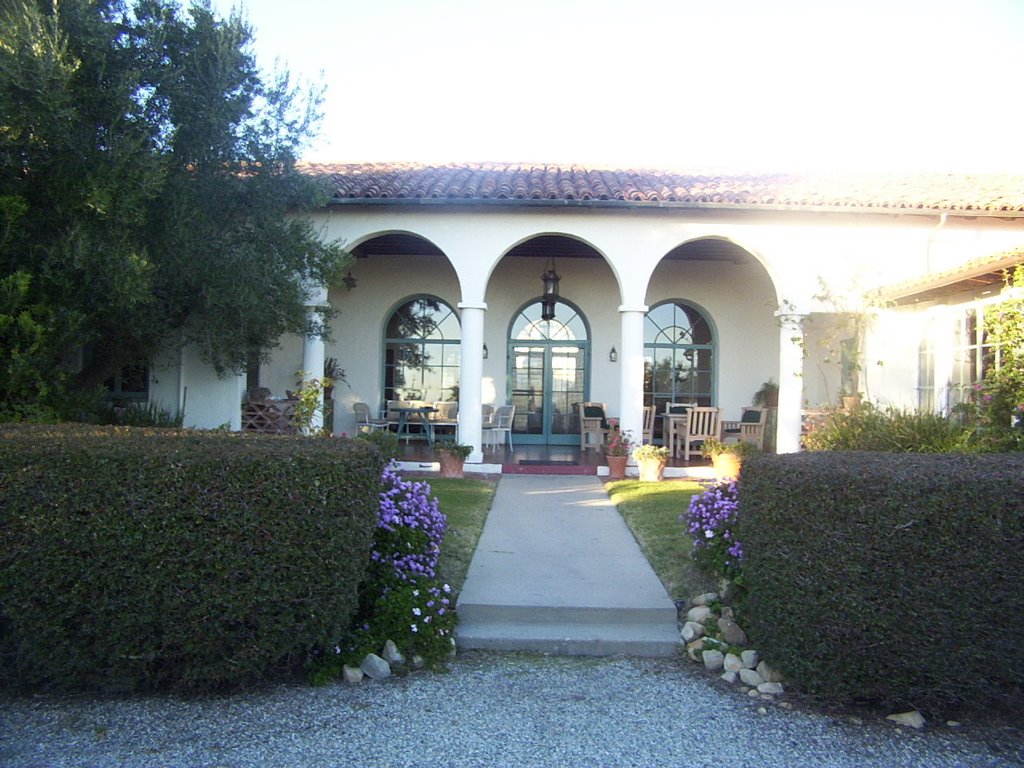
It has far too long since I've written anything here, but, well, I've been busy.
First, while I was in Santa Barbara a month ago, I received an email asking if I would like to be the Senior Chaplain at RMIT University, one of the two schools in Melbourne where I've been working for the last year. After some prayer I said yes, and since then I've spent a lot of time trying to get a shape of where this new ministry might be going. It is a very exciting prospect!
Then (and I didn't tell you 'cause I know how you worry) early this year I was diagnosed with high blood pressure and started to take medication to bring it down. At the same time some tests indicated there might be an irregularity with my heart and that was scary! But in the last few weeks the new has been good, the blood pressure is fine now and two weeks ago I had the test and my heart is fine - the Dr. even said I could exercise without restriction, and should do so. That brings on a whole new constellation of concerns, but they're much lighter ones.
Anyway, I will be better about writing in the next few weeks. I promise!
It has far too long since I've written anything here, but, well, I've been busy.
First, while I was in Santa Barbara a month ago, I received an email asking if I would like to be the Senior Chaplain at RMIT University, one of the two schools in Melbourne where I've been working for the last year. After some prayer I said yes, and since then I've spent a lot of time trying to get a shape of where this new ministry might be going. It is a very exciting prospect!
Then (and I didn't tell you 'cause I know how you worry) early this year I was diagnosed with high blood pressure and started to take medication to bring it down. At the same time some tests indicated there might be an irregularity with my heart and that was scary! But in the last few weeks the new has been good, the blood pressure is fine now and two weeks ago I had the test and my heart is fine - the Dr. even said I could exercise without restriction, and should do so. That brings on a whole new constellation of concerns, but they're much lighter ones.
Anyway, I will be better about writing in the next few weeks. I promise!
Subscribe to:
Posts (Atom)