Wednesday, October 04, 2006

From the Perth Royal Show


The Royal Parade - kids, adults, on horses, leading cattle of all kinds, circling the field with majesty and pride. It's the Peaceable Kingdom and an overflowing joy, I could spend years watching this!

Monday, September 25, 2006

A Week Away

It's been too long since I've written, and in a hour I leave for the airport for a week in Perth! This is for a chaplaincy conference, so it won't be a pure rest, although restorative. This is the third year I've gone to the TCMA gathering and I look forward to connecting with other chaplains from around Australia. It will be the first time in Western Australia and I want to swim - if I can - in the Indian Ocean, at least get my feet wet.

I've been working maybe too hard, but I'm changing rhythm since the Religious Affairs Committee meeting last month. Taking time for reading and prayer, getting files ordered, even back to sitting in the Cafe and connecting with whoever comes by. I've fallen out of the gym routine - again - but will try to get back on that wagon next week when I return.

A note: I want to write that I enjoy seeing where the people who visit this site come from, it really is world-wide and that amazes me. There are a few weblogs that I check on regularly and I feel like I know something about their lives, and appreciate the chance to look into someone else's daily - weekly - experience. So if you just stopped by, you're welcome.

Thursday, September 14, 2006

Five years ago....

Notes From An American Abroad in Melbourne, Australia
A Few Days After September 11, 2001

Yesterday we took the tram out to the American consulate on St. Kilda Road here in Melbourne. Several other people got off the tram at the same time and walked in the same direction. You could see the building from the intersection, a modern low rise building, modest architecture, unremarkable except that people were walking around the small pattern of box hedges that marked the front entrance and which bloomed with bouquets of cut flowers in paper wrappings, with plants and sprays of roses, with candles and cards and letters printed and written on red, white and blue papers and addressed to the American people from the people of Melbourne, Victoria, Australia. “Our hearts are with you,” “You are in our prayers,” “We send our love.” I watched a young teenage girl leave her mothers side to put a bouquet of daisies on the ground at the foot of the massed flowers and I went over to speak to her: “Excuse me,” I said, , “but as an American who feels very far from home right now,” and the tears started again, “I just wanted to say thank you very much.” I felt a touch on my arm and turned to see her mothers wet eyes as she smiled at me and said, “That’s OK.

That clock radio clicked on at 5:00AM that first morning and there was heard a segment of the first press conference held by the Mayor of New York. It made no sense at first; then facts filtered in, contexts drew lines, and there was a wavering instant when you hoped that it was some kind of fictional radio drama, “Orson Welles and the War of the Worlds,” but this was all true.

Two jets crashed into the twin towers of the 110 story World Trade Center in lower Manhattan. First one and then a second plane crashed into the towers, flames and fuel spilling into and through and down the building, trajectories and shards of wreckage and bodies falling down into the streets of New York like fireworks, and then the buildings themselves pancake down to the ground and thousands are killed. At the same time another plane flies into the Pentagon - 800 estimated killed - and a fourth plane crashes in a Pennsylvania wood, perhaps in an aborted attempt to crash into the White House. More deaths, and more waiting to see what is next.

After the 7:15AM Mass, which turns into a requiem, we spend the rest of the morning in dumb witness in front of the television. Most of the local broadcasting is curtailed as CNN, CBS, ABC, beam in directly from the east coast of the US with more news and pictures, the same pictures from different angles, over and over again, as the death toll rises, as suspicion points to a fundamentalist in Afghanistan. The day goes on and the flags over the Parliament building next door go to half mast, a report comes that people are putting flowers at the doors of the American consulate which has closed for the day, a service is scheduled at the Anglican Cathedral. I worry that I will cry too hard in public and be unable to stop.

Where does this begin and where will it end? Where does God meet all this? In the sad and angry tears of people left behind? In the graceful acts of courage, reconciliation, redemption: the firemen walking into the collapsing building, the doctor with a face dusted like a shroud continuing to care for the wounded and dying? In the dying victims: the two month old child carried by his father on the plane, the same father who decided to stop the hijackers, who in turn believed that this was Gods will for them? In the chaplain killed in giving the last rites to another victim. In the widespread pain of people waiting for word of a partner, a child, a parent, a friend, waiting and perhaps praying across this little fragile linked up world where we all are nerved together in the shocking light of this new holocaust. What does God mean here?

Perhaps the answer to all this is only in the attention, the listening, the very surrender necessary in prayer. Maybe there some peace is found; not certitude, not any kind of answer except that maybe God is big enough to reconcile all this somehow. There may be such love over all. But that does not ease.

In the afternoon my friend John and I drive to a meeting in Gembrook, a new retreat center an hour away from Melbourne. The people there have just gotten the news on the radio and want to talk about it, but I can’t hear more and go out for a walk on the grounds. John joins me after awhile and soon Tom, another trustee of the place, comes down the hill from the main house, crying hard himself, and the three of us end up sitting on a fallen log at the edge of the vegetable garden, empty now at the end of a dry Australian winter, and the beginning of an uncertain spring, and after some more talk and tears we end in silent prayer again.

And I remember what happened in December 1986, when an American plane flew into a mountaintop in Greenland the week before Christmas and several hundred people were killed. I was the acolyte at the midweek Eucharist at a local parish, nobody else was attending, I asked the celebrant if this Mass could be dedicated for those killed earlier in the day. And as the service went on I knew - could almost see - that they, the dead, were there; the very same ones who had been ripped out of the sky were somehow with us, that (and this is very hard to write) there was a tear in the world and the people who died could see us through the torn fabric of the cosmos, and could take comfort, solace, nourishment in our prayer, pain, remembering of connection with them, even though that very awareness came at the time when the connection was lost. And I knew with deep certitude that they were being fed with our tears, and that what we were doing and feeling mattered and made sense on a greater level than I had understood before.

Thursday we went to St. Paul’s Cathedral. The building was crowded and we sang Amazing Grace, and there were readings of Paul at his best from Romans and the Twenty third Psalm and the Beatitudes from Matthew and then the Consul General spoke briefly about how touched he was by all the flowers and tributes placed in front of the American consulate by the people of Melbourne. And at the end a soloist sang, American the Beautiful: “Thine alabaster cities gleam undimmed by human tears.” And so many of us cried for what had been lost and what we held dear and for what we didn’t know. And then we took the tram out to the consulate and I saw the little girl and the flowers.

After that John and I walked to the Botanical Gardens a few blocks further on St. Kilda Road. We stopped at the Shrine of Remembrance on the way, a memorial for the dead of WW1 and WW2, a tall stone building with plaques and books open to the names of people who died in Europe and the Pacific, Africa, the Middle East, Asia and the Far East: all the places of heroism and holocaust, places where the best and the worst of human nature was seen. From the balcony on the upper floor you can see the skyline of Melbourne and the water of Port Philip Bay, and at the foot of the monument, the eternal flame for the Royal Australian Air Force, and a small statue of a man leading a donkey loaded with a wounded soldier. The mans name was Simpson and he and the donkey tended to the wounded and dying in the midst of the battle of Gallipoli in WW1, taking water to the troupes and bringing back the wounded from the front lines for several weeks until they too were killed.

And I know that we do not need more wounded soldiers, we do not need another donkey carrying the victims of war and hatred and violence. We do not need to seek vindication of any kind. We have been there, we have done that, it does not work.

We walked into the Botanical Garden around three in the afternoon on this early spring day. Trees and flowers are starting to bloom, the weather was fine and across the pond from the tea house there was a wedding with a bride in white, men in dark suits, women in big flowered hats. Outside of the tea house we spoke to a man with three shy, grinning greyhounds named Bill, Ernest, and Wilma. In the line to be served a family in front of us - a grandmother, father and two sons around 10 and 12 - were making jokes about how much tea and how many cookies they could eat. We took our food and went to sit on the terrace outside overlooking the pond and it was a very peaceful place.

Listen: there is no reason to hate, there is no profit in anger, there is no glory in inflicting death or in dying for that matter. There is too much to love, too much to lose, too many who are worth far too much. And all we can do is keep the world open, keep our hearts open for the wideness of Gods mercy, for the depth of our connection to one another, to the constant surprise rising up of the fragility and the strength of love which does endure and will succeed. And this is heartbreaking work, but it must be done, so that we can remember again and again, how much there is to lose, how much to gain.

Monday, August 21, 2006

The First Eucharist of the Semester, RMIT Spiritual Centre

What I've been doing lately and why I've been busy...

Senior Chaplain’s Report.

It has been almost nine months since I (one pre-dawn January morning opening my laptop to get wireless email while on retreat at a monastery on the California coast) received an email from Sr. Virginia asking if I would be interested in being the Senior Chaplain at RMIT. When I read that, then all I could do is thank God that I had a fresh-brewed cup of good coffee at my side as I looked out the window over the Santa Barbara coast to the lightening Pacific and considered some of the amazing possibilities.

A lot can happen in nine months. Much of the first trimester, even the first half, had to do with easing the transition, getting ready for the move. Sr. V. needed to go through much material and farewell with many people, but her prime motivation was to make for a smooth transition for her successor, and I am very thankful for her work. I ended up with a collections of papers titled, “The Chaplaincy Code, or What Da Vinci Never Knew!”, which I often refer to for help in getting through and making sense of this Byzantine campus and its constituent communities

The second part of the journey, following the farewell, has been looking at the ecology of the place, thinking and rethinking where chaplaincy might sit and how it might move under my watch. Some of this had meant looking through drawers and files, getting a sense of where we had been as well as where we might go. A lot of it was talking to good co-workers like Libby, Okkie and Agus, Rob, Tony and James, going to meetings with the Body, Mind, Spirit committee of SSG, starting conversations with Angela and Lisse, with strangers on Bowen Street, in the Caf, Library, anywhere really, and simply listening, praying, letting go and letting be.

But the way I finally make sense of things is to write, so I decided to look at how chaplaincy had been written about in the past and then put together a new series of brochures and fliers to articulate who we are and what we are about on campus. In doing this, I realised there were three areas where I saw the chaplaincy taking place.

The first was to identify ourselves as a broad-based resource for the whole RMIT community, not unlike the fitness centre, art gallery, counseling centre or library: helping students and staff connect their educational experience with the wisdom of the major religions and spiritual traditions, offering a variety of resources to broaden and deepen both present educational experience and future endeavors. The second aim was to offer a variety of gatherings conversations lectures, performances that connect the themes of personal and corporate faith with issues of heart and soul, justice and mercy, conviction and community. The third was to follow from this and use these offerings and gatherings to create opportunities for deeper and more personal connections, for pastoral relationships and for personal counseling. As I put it elsewhere, "This might mean offering suggestions for a local worship community or a spiritual home, but it can also mean a cool glass of water or a hot cuppa during a difficult day, simply sitting alongside or standing nearby to encourage people through the trying moments when life closes an old doorway or opens a new challenge".

By all this I don’t’ mean simply “tea and sympathy”, nor is chaplaincy some kind of “Counseling-Lite!” Rather that we try to open and honor a place on this campus where questions of identity and occupation, solitude and community, fear and hope may be articulated and honoured. The great thing is that a cup of tea and a biscuit seem to help the process immeasurably! As an aside, I‘m happy to note that a number of people are being referred to us by the Counselling Centre.

In addition to the initial brochure on the Chaplaincy, we have built, with the able assistance of Kieran Dell, a brochure on the Spiritual Centre, using text from the RAC. Both these, in addition to various fliers for specific programs and series, are gradually covering the campuses and will soon be on the new website which is almost, please God, finished. In addition to this, Libby Austin designed and placed a wonderful history of the space in the glass cabinet on the first floor of the Spiritual Centre. Together with the new brochures, this exhibit points the way to increasing the profile of this great landmark building for the campus and the larger community. I would hope we can increase its popularity for weddings and other transitional ceremonies in the future, but that’s yet another brochure and one more website!

There’s a lot happening in the Spiritual Centre. Continuing from an initial offering last year, Philomena Holman, Lyndon Medina and I are co-facilitating two weekly opportunities for group meditation. “Opening Silence” happens every Tuesday at 3:30 and every Thursday at 12:30. These gatherings are open to students and staff and provide a good place to begin or deepen a meditative or contemplative practise. The response to this has been wonderful. Building on the success we had with our offerings last semester, and with word of mouth, posters and emails, the numbers are growing nicely with a high of over twenty people at some sittings! We are now keeping supplies on-hand for a cuppa and a biscuit following and, again, and this is opening opportunities for pastoral work amidst a growing community of staff and students.

For the last two years my own work in tertiary chaplaincy at RMIT and La Trobe Universities has been partially underwritten by a ministry grant from Bishop Philip Huggins and the Anglican Diocese of Melbourne. After much groundwork and many meetings over the last year, we received word that the Melbourne Anglican Benevolent Society has approved my work in “Opening Silence” as a suitable tax-deductible designated project. We are hopeful that will be lead to increased funding for the future of this particular offering in the coming year and may serve as a template for future chaplaincy programs in the future. Also with regards to funding, I want to acknowledge and give thanks for the honorarium which I received this year from SSG. This amount, along with the existing funding from the Anglican Church, and with the blessing of Bishop Huggins, has enabled me to give four plus days a week at RMIT for the transition period at the Chaplaincy. I am hopeful that the constellation of funding from these and other sources will allow this level of support for the chaplaincy to continue into the future.

Getting back to the Spiritual Centre, we started a weekly 12:30pm Eucharist in early August, and will be using a variety of nearby clergy including Tat Hean Lie (a chaplain at St. Vincent’s Hospital and RMIT alum) and others from St. Peter’s Eastern Hill as well as other ordained people from a variety of faith communities. Our numbers for these services are small, but I am hopeful that we will gather a community over time. Libby Austin continues to officiate at “Morning Prayer” on Tuesday morning at 10:00 with a group that finds that the weekly gathering of Psalm, Scripture, Reflection and silence wrapped in prayer a good and enriching experience.

I have also begun a multi-faith prayer time on Friday morning at 10:00. This is open to people of any and no particular tradition or belief and is a time of prayerful presence to all people, those who are known to us and those unknown, all who are suffering and in need in the world. This service stands as a template in case of any crisis-situation emerging in the world, whether personal, ecological or political. In addition to these offerings, the Islamic Students are using the Spiritual Centre for their worship every Friday along with a regularly scheduled time for the Christian Union later in the day. So speech and silence, petitions and prayers for all kinds and conditions of people and places are finding a venue at the old Melbourne Gaol Chapel.

It is also a site for an in-class student project! A design studio course, taught by Rochus Hinkel and Tim Schork (who were referred to us by Leon Van Schaik), has some twenty students busily working on ideas, images and models for furnishings, with plans for an exhibit by the end of this semester. A happy benefit of this is that several members of the course are now part of the meditation gatherings.

We’re running some old and new things in the Chaplaincy Centre as well. On Tuesday at 12:30pm we meet for “The Loop,” now known as “Opening Conversation”. It is a time to talk through the most important things: movies, money, politics, poetics, sex, drugs, rock and roll, economics, ecology, education, and taking care of yourself and others. We’re aiming to bring a variety of viewpoints, traditions and tastes together as we discuss some ways and means to make our lives livelier and better and asking people to bring their opinions (and lunch) for some good times together. So far we’ve just had a few people show up, but I think it is important to put the effort out and to let people know that the Chaplaincy is a safe place to discuss some of the more difficult issues. Our topic for next week is, “Is Religion Healthy?” We’re also meeting on Thursdays @ 5:00 to “listen, read, pray, explore, agree and disagree” on “Opening the Gospels!” The numbers here are low as well, but I am committed to follow this through the semester to see if it can gain some momentum.

We had another great idea but nobody came! Jillian Bull (Counselling) and I put together a six week series for Wednesday afternoon called “The Table, the Journey, the Breath of Fresh Air” to help people look for the place where past, present, and purpose meet, but found no takers. We might look to offer it again at another time in the future. I might also offer this format – it comes from an undone book I started several years ago – as a one day retreat at the Spiritual Centre towards the end of the semester. There will be more about this in the coming weeks.

As my time at RMIT increases I am hoping to do more in the classrooms. This semester I will be giving a lecture on Thomas Merton for Des Cahill’s class on Globalism and Religion and will be giving a presentation on “Teaching from the Centre” for “Teaching and Learning at RMIT” as well.

We’ve had a good team in chaplaincy this year. I have mentioned Libby Austin, whose time will conclude in September, as well as James Grant, Robert Miller, Tony Salisbury and the super student assistants, Okkie Tanupradja and Agus Effendy. I’ve spent good times with each of these people and their full mix of presence, prayers, encouragement, criticism, candour, help and humour has made this semester much less of a climb and much more of an adventurous pilgrimage in good company. I am hopeful that the RMIT Chaplaincy increasingly makes sense as a variety of communities, and if that is so, it is because these people have helped to make this ideal more of a living experience. I hope that their ministry has been enlarged and enhanced by our recent work as mine has.

With regards to our chaplains, we are now in the process of regularizing Tony’s status within CCTI’s guidelines and perimeters and increasingly his visibility within the deaf community and on the campus. I am glad to report that James Grant and I are talking about ways in which his new position as the Vicar of All Saints’ Parish, Preston, may help us support a renewed presence for the chaplaincies at the Bundoora campuses of both RMIT and La Trobe University. To look to the future, I have either started or am continuing dialogue with ministers and representatives from Baptist, Buddhist, Jewish, Roman Catholic, Islamic, and Uniting traditions to explore how they might be a part of the mix of resources and offerings sponsored and supported by RMIT Chaplaincy.

In this line, I attended the third annual Jewish-Christian-Muslim conference in July and found it to be equal parts of education, revelation and delight. I am still following through on some of the contacts made during the conference and it is still quite an amazing and rich experience which I think will bear much fruit in the future.

In late September I will be attending the annual meeting of the Tertiary Campus Ministers Association in Perth. I will be giving a talk on Thomas Merton as a paradigm for chaplaincy, and hope to gather information on how various Australian chaplaincies make sense, create community, meet and monitor the various “visiting religious professionals” that are increasingly found on campus. Following this, I will be working to establish a set of clear expectation and norms for visiting religious professionals – Visiting Chaplains? – that are consistent with a multi-faith and multi-cultural environment such as RMIT.

There’s probably more that I could add, but this already far too long for an overview and there are other things to do. I am looking to do a series on Thomas Merton and the Christian-Buddhist connection, we’re looking to start a series on “Spirituality in the Pub” early next year, I am excited about some of the creative connections coming within the larger web of SSG and the greater University, and I am already working too hard and that worries me!

Early this year I saw that one of the thing most prevalent on this campus was simple burnout. So many people working so hard on the edge, as I have said, between creativity and chaos. I’ve looked into that abyss more frequently lately, and it worries me. Too many good people work too hard and too long, it is not healthy for them and it does not model a good world for the students and the communities we serve. Part of what I hope to do in the coming year is to ask question of how we can learn and work and live as RMIT as a whole (holy?) and healthier community. I am not sure how that can take place, so I need your help. Please take some time to consider your responses and ideas on how we can make this place a better place for all of us in our great work together.

Respectfully submitted,


Robert Whalley

Sunday, July 30, 2006

Ordinary Sunday 17B St. Peter's Eastern Hill

I want to begin this morning with a short announcement and then with a longer confession. First, this coming Wednesday afternoon at 12:30 we begin a weekly Eucharist at the RMIT Spiritual Centre – the onetime chapel of the Old Melbourne Gaol. Our celebrant for the initial service for the semester will be our Bishop, the Rt. Rev, Philip Huggins, and I invite you to attend. Our main celebrant will be our own Fr. Tat, and please know that you are always welcome.

Now onto the confession: Yesterday I did something that I’m a little ashamed to say that I haven’t done for awhile, but something I recommend to you without reservation which is that I sat down and read one of the Gospels – this time John – all the way through. I used a translation I don’t usually use - The New Jerusalem, which is nicely poetic - and as I read I took notes on my computer: lines I liked, images that stayed, things that surprised me as I read, and it probably took less than three hours.

So I want to talk about the Gospel lesson for today, and to set it in the context of the whole Gospel in which it takes place.

The Gospel according to John starts big, with the wonderful prose poem, “In the beginning was the Word”, serving as a kind of overture with all the themes and concerns of the feast of Good News which follows. The action opens with the introduction of John the Baptist, who baptises Jesus, sees him as the Lamb of God, and recommends him to a few disciples. Jesus gathers a few more on his own; and they go off to a wedding.
It is where the first of seven signs in John will happen: seven miracles which highlight the shape of Jesus’ call and journey. This first miracle is turning water into wine at that wedding so the spirit at the end of the party surpasses that at the beginning. It is a theme that will continue.

Jesus then kicks the moneychangers out of the temple, talks with Nicodemus about being born again from above, and gets into a strange and wonderful conversation with a woman who has had 5 husbands - and here he speaks of water he shall give that becomes a well, welling up to eternal life. After more talk, and a mysterious conversation with his disciples who are telling him to eat (He says in response that his food is to do the will of the one who sent him) he heals the son of the royal official – A gentile - as well as healing a man who had been paralysed for thirty-eight years. These are the second and third signs, neither is what you’d call universally popular, bringing up issues of how you deal with outsiders as well as healing on the Sabbath; and his enemies, who are increasing, come closer, beginning to harass him, intending to kill him, sooner rather than later.

After that comes the Feeding of the five thousand: which we just heard. Jesus and the disciples are trying to get away from the increasing crowds, looking for some quiet in the country, and then everybody shows up! There’s a question and answer time with the disciples: one question: How can we feed all these people? And two answers: a) it would cost too much or b) there is a little boy with five loaves and two fish. I ask you which is the pessimist and which is the optimist? But the centre of the story comes when they all sit down: Jesus takes, gives thanks, shares the bread; the same with the fish, and twelve baskets are left over and everything is gathered together in the end. The fourth sign, the one in the middle of it all, then after such a right time, a taste of renewal, abundance, heaven, it all goes wrong. The crowd tries to make him their earthly king, and he heads for the hills alone. That’s what we heard, our lesson for the day. But going on with the story…

Later that same night the disciples are out at sea and Jesus comes to them, walking on the water – the fifth sign - terrifying them when he does so, and later confusing them further with his words, “eat my flesh and drink my blood, and live forever”. Many of his disciples go away and accompany him no more. He continues on, upsetting the residents of Jerusalem and his own family and friends, “Let anyone who is thirsty come to me! Let anyone who believes in me come and drink! “

He gets back to Jerusalem with another unsettling encounter with another somewhat shady woman – this one caught in adultery, then more teaching, “If you make my word your home you will indeed be my disciples, before Abraham was, I am. I am the light of the world.”

Another healing, the sixth sign, this time of the man born blind, creating havoc both with family and religious authorities, and still more scandalous teaching, “I am the gate, I am the good shepherd, laying down his life for the sheep, in order to take it up again. The father and I are one: the Father in me and I in the Father”.

And finally the Raising of Lazarus – the last sign –, which opens the way to his own death. Of course, he sees it differently: One more teaching time and preparing for the end. But not an end as we might see it. End as goal, fruition, and the start of the great harvest. As he says:

“The hour for the Son of man to be glorified, to be lifted up from the earth, to draw all people to himself [So] love one another as I have loved you. I am the Way, I am Truth and Life.” And finally even more than that, for, “the Paraclete, the Holy Spirit, whom the father will send in my name, will teach you everything and remind you of all I have said to you. Peace I leave with you. Bear much fruit, love one another, you are my friends. Be courageous, I have conquered the world. As the father sent me, so I am sending you.” And he goes on his way to die, and we all know the story though it always surprises.

Seven signs, much teaching, travelling, solitude, community, food, drink, confusion, tension, life, death, resurrection and a promise that nothing is lost, all gathered together at the end; and this Jesus in the midst of it. A quick sketch of the Gospel of John; 45 pages in the translation that I reread yesterday afternoon: words that have fired the souls of countless humans in the last two thousand years. One of four Gospels, all totalling less than 200 pages that comfort, challenge, change, and fire our understanding of who we are and what we’re for.

Which is what? What is it about, why are we here, where’s the payoff? Something that is not easy to understand, not given to simple summary, requiring more of what T. S, Eliot said about prayer:

“You would have to put off
Sense and notion. You are not here to verify,
Instruct yourself, or inform curiosity
Or carry report, You are here to kneel
Where prayer has been valid. And prayer is more
Than an order of words, the conscious occupation
Of the praying mind, or the sound of the voice praying.”

Then and now, Jesus calls us to relationship, friendship, with all the hopes and ambiguities, and soft edges and good intentions that come with any relationship that extends over trials and through time. The words we hear today need to be chewed slowly, gnashed against so many existing and outworn sensibilities, consumed and made part of our daily experience in our daily work and world. For they contain news of a very foreign country many mysteries as well. We forget that life can be this deep, living in a world that gives us so many simple instructions. But the Gospels are not owners-manuals, how-to-books, easy prescriptions or proscriptions. Instead they are a library as large as life itself, larger, and just as mystifying: they must be given room to be taken seriously and they are well worth the struggle. For in any moment all or part of these words, our story, can open the door to see the Lord, taking us to the mountaintop somewhere between the wedding and the cross, where we can seize the opportunity, and receive the gift of eternal nurture and nourishment. It can happen right here; sharing food that opens the door to see the world and our place in it, our ministry in it, anew. Hope that will last, surety that nothing will be lost. Peace that passes understanding. All in the name of Christ.

Amen.

Saturday, July 29, 2006

The Spiritual Centre at RMIT

Second Semester at RMIT

Dear Friends of the RMIT Chaplaincy

Someone once said that life kept interrupting their plans! RMIT Chaplaincy tries to plan offerings, gatherings and activities to enhance and deepen the RMIT experience, and still leave time for life to make its amazing interruptions. Here’s what we’re putting in place for in the coming semester.

First, a lot will be going on at the Spiritual Centre. Tuesday’s at 12:30 will be the first weekly meeting for “The Loop,” now known as “Opening Conversation”. It is a time to see where spirituality meets the road as we talk through the most important things: movies, money, politics, poetics, sex, drugs, rock and roll, economics, ecology, education, and taking care of yourself and others. We’re aiming to bring a variety of viewpoints, traditions and tastes together as we discuss some ways and means to make our lives livelier and better. So bring your opinions and your lunch for some good times together.

But it is not just talk at the Spiritual Centre this semester. We are joining forces with the Counselling Centre to sponsor weekly opportunities for group meditation. “Opening Silence” happens every Tuesday at 3:30 and every Thursday at 12:30. These gatherings are open to students and staff and provide a good place to begin or deepen a meditative or contemplative practise. We will be offering some old and new ways and means to enhance your silent time and you are always welcome to attend. We will be having a weekly 12:30pm Eucharist beginning this coming Wednesday, 2 August, when the Rt. Rev. Philip Huggins, Bishop of the Northern Region, Anglican Diocese of Melbourne, will join us in this ancient and wonderful rite. Our regular celebrant thereafter will be the Rev. Tat Hean Lie, a chaplain at St. Vincent’s Hospital and RMIT alum.

Libby Austin continues to officiate at “Morning Prayer” on Tuesday morning at 10:00 with a group that finds that the weekly gathering of Psalm, Scripture, Reflection and silence wrapped in prayer a good and enriching experience. There will also be a multi-faith prayer time on Friday morning at 10:00 to put the week to rest. This is open to people of any and no particular tradition or belief and will emphasize a time of prayerful presence to all people, those who are known to us and those unknown, all who are suffering and in need in the world. The Islamic Students are using the Spiritual Centre for their worship every Friday as well, so speech and silence, petitions and prayers for all kinds and conditions of people and places are finding a venue at the Spiritual Centre and we rejoice in this.

The Chaplaincy Centre in Building 11A has several regular activities in addition to the regular round of tea and biscuits, conversations and caring that have been a long tradition in that space. This semester we have new series called “The Table, the Journey, the Breath of Fresh Air” which will meet every Wednesday from 3:00 to 4:30 in a six week series of meetings aiming to help you “to consider memories, messages, meaning and hope…looking for the place where past, present, and purpose meet.” The group is co-facilitated by Counselling and Chaplaincy and is open to present RMIT staff and students. It is without charge but is limited to 12 people. For further information, call Jillian Bull (Counselling) at 9925-4365 or Robert Whalley (Chaplaincy) at 9925-2043.

And finally, every Thursday @ 5:00 pm we will be meeting in the Chaplaincy and “Opening the Gospels!” in a weekly hour-long gathering to listen, read, pray, explore, agree and disagree, question, and learn more about that portion of the Gospel read in many churches on the following Sunday. Again, everyone is welcome and tea, coffee, biscuits and sherry will be served! For more information, call the chaplaincy at 9925-2043.

We’re looking forward to a wonderful semester for the Chaplaincy at RMIT and hoping that you will be a part of it!

Peace,

Rob

Thursday, July 13, 2006

Merton at his best.

Life consists in learning to live on one’s own, spontaneous, freewheeling: to do this one must recognize what is one’s own—be familiar and at home with oneself. This means basically learning who one is, and learning what one has to offer to the contemporary world, and then learning how to make that offering valid.

The purpose of education is to show us how to define ourselves authentically and spontaneously in relation to our world—not to impose a prefabricated definition of the world, still less an arbitrary definition of ourselves as individuals. The world is made up of the people who are fully alive in it: that is, of the people who can be themselves in it and can enter into a living and fruitful relationship with each other in it. The world is, therefore, more real in proportion as the people in it are able to be more fully and more humanly alive: that is to say, better able to make a lucid and conscious use of their freedom. Basically, this freedom must consist first of all in the capacity to choose their own lives, to find themselves on the deepest possible level. A superficial freedom to wander aimlessly here and there, to taste this or that, to make a choice of distractions … is simply a sham. It claims to be a freedom of “choice” when it has evaded the basic task of discovering who it is that chooses. It is not free because it is unwilling to face the risk of self-discovery.

Thomas Merton. “Learning to Live” in Love and Living. Edited by Naomi Burton Stone and
Brother Patrick Hart. New York: Farrar, Straus & Giroux, 1979: 3-4.

Friday, July 07, 2006

Semester break and a conference

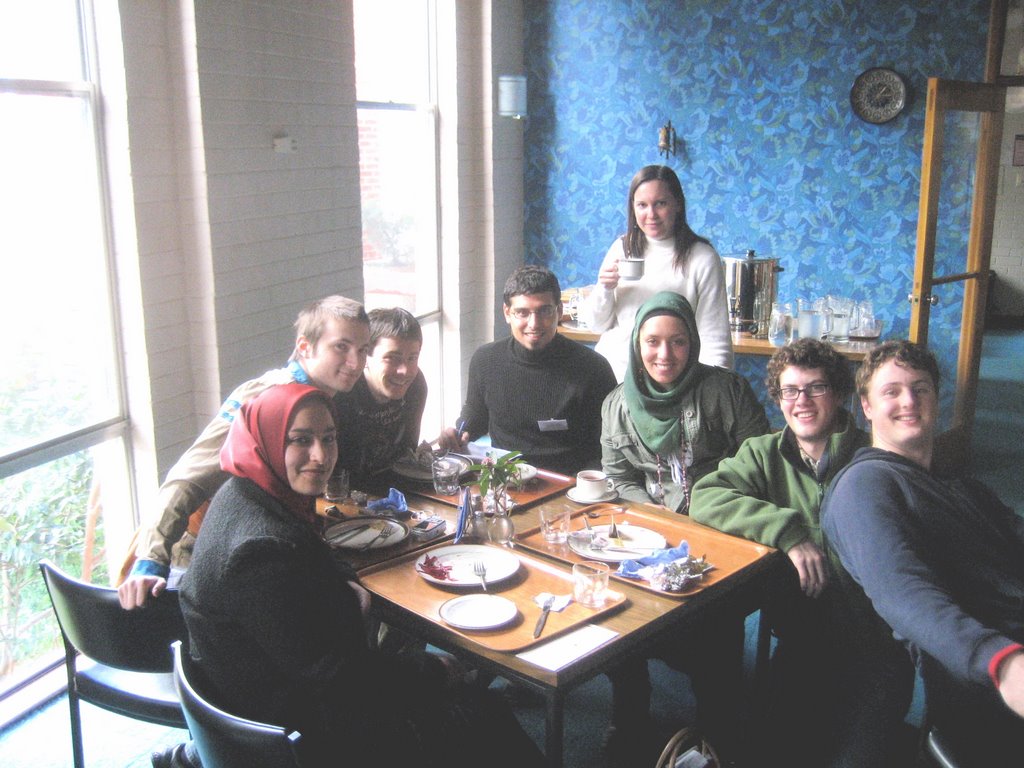
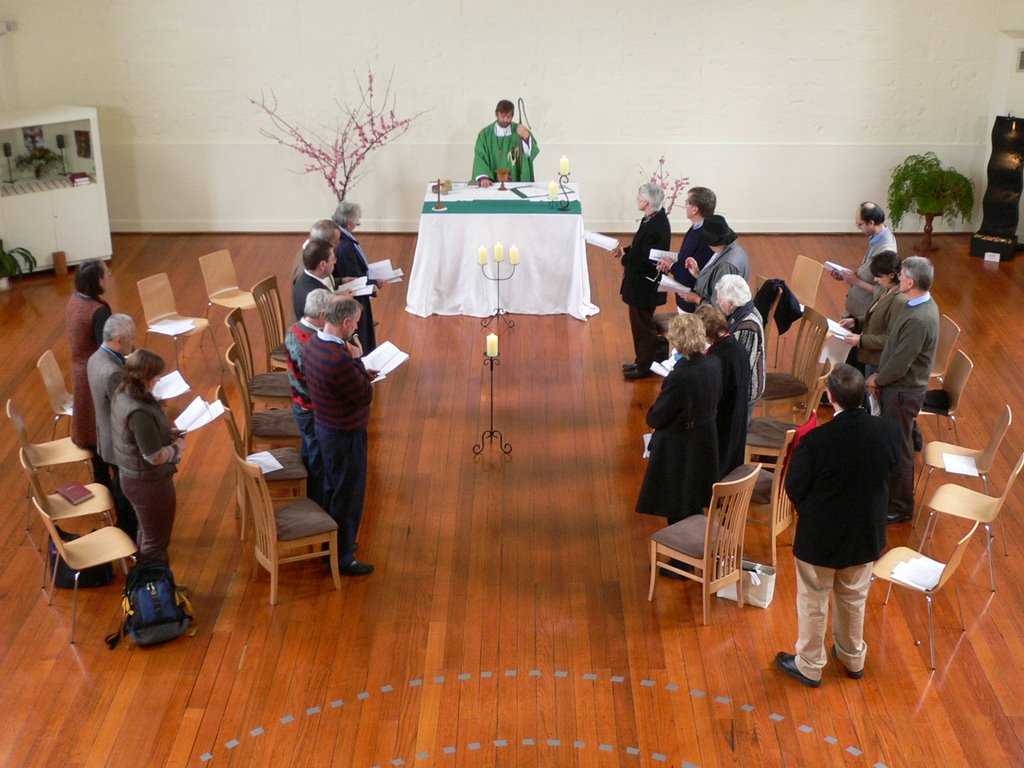
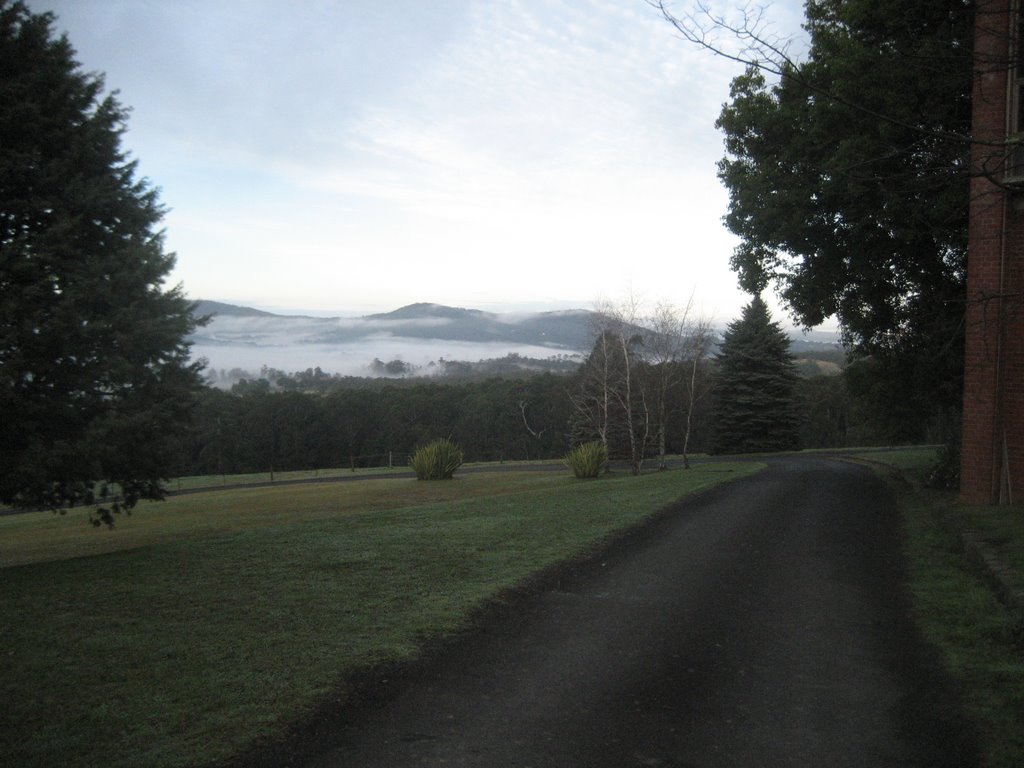
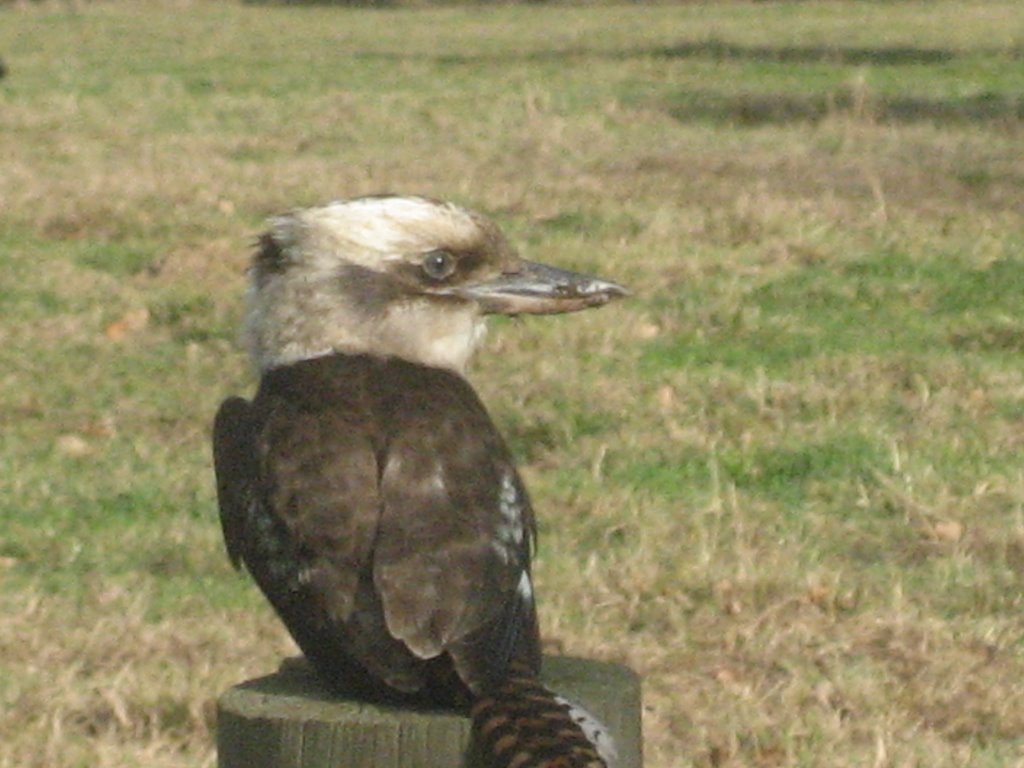
I just got back from a 3 day conference sponsored by the Jewish Christian Muslim Association of Australia. Wonderful, rich, exciting time. Dealing with text, tradition and truths, exclusive and shared. I wanted to go because I didn't have a sense of what the variety of the Islamic tradition might contain, where I have a sense of the diversity that can be contained with the Jewish and Christian communities; plus I wanted some resources for speakers and discussion for the upcoming semester and the coming year at RMIT. It worked well. I made some good connections, met some lovely people, maybe even opened the door to future friendships. Here are some photos from the occasion - well, two from my morning walk and one from the last day luncheon. Now a few days of work preparing for next semester and then a short break in Sydney.

Morning in the Dandenong Mountains, an hour out of Melbourne

One of the things I love about Australia!